
Best Automated Regression Testing Tools in 2026: 7 Compared
Seven automated regression testing tools compared by use case, coding requirement, and standout feature. Honest reviews from practitioners, not vendor marketing.
Yuvan Sundrani · 13 min read
autosana.ai
There is no single best regression testing tool. The right choice depends on what platforms you ship to, who writes and maintains the tests, and whether you want code-first control or AI-assisted maintenance. Most comparison guides rank tools by features. The more useful ranking is by maintenance cost: how often does a UI change force you to rewrite a test? Here is how the leading options compare, followed by honest reviews of each.
Key Takeaways
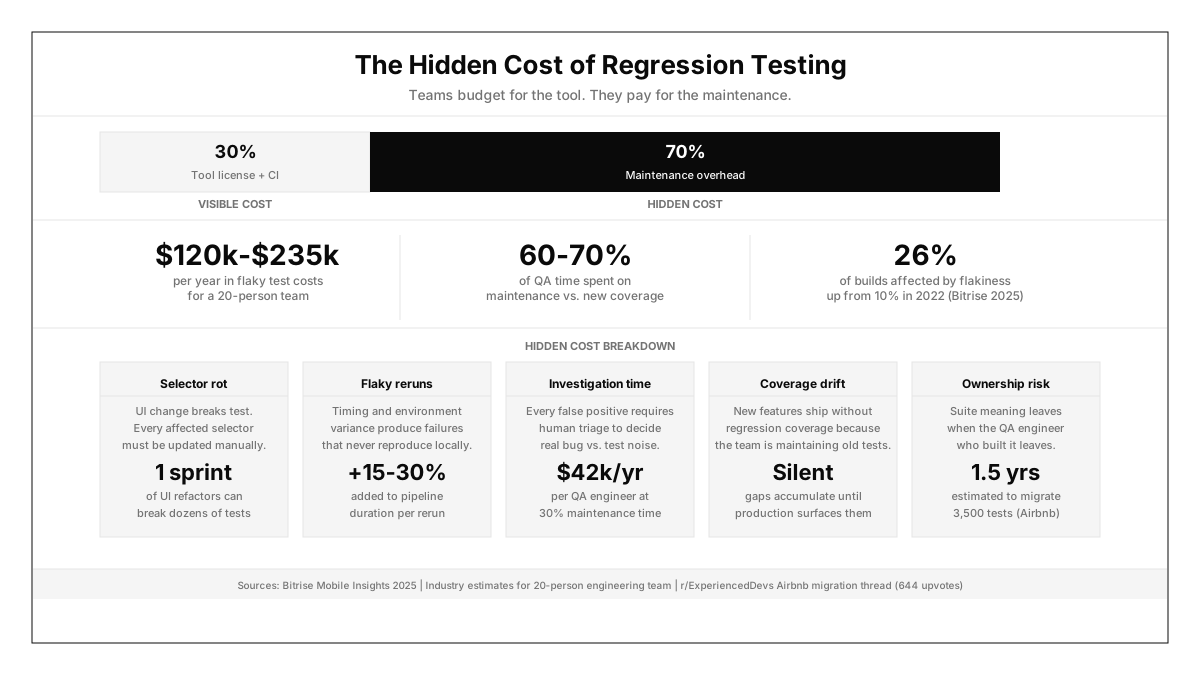
- Teams spend 60 to 70 percent of QA time maintaining existing regression tests, not adding new coverage. The tool you pick determines how fast that ratio degrades.
- Flaky tests cost $120,000 to $235,000 per year for a 20-person team when rerun overhead, investigation time, and delayed shipping are factored in.
- Selector-based tools (Selenium, Cypress, Playwright) break every time the UI changes. Self-healing tools (Autosana, Mabl, Momentic) reanchor automatically.
- The share of teams experiencing flakiness grew from 10 percent of builds in 2022 to 26 percent in 2025, per Bitrise Mobile Insights.
- Autosana generates intent-based regression flows across iOS, Android, and web and self-heals when selectors break. No manual updates required.
Which automated regression testing tools are teams using in 2026?
| Tool | Best For | Coding Required | Standout Feature | Pricing |
|---|---|---|---|---|
| Autosana | Cross-platform E2E (iOS, Android, web) | No-code (intent-based) | Self-healing agent, one flow across three platforms | Contact for pricing |
| Playwright | Modern web apps, fast CI/CD | High (TS, JS, Python, Java, .NET) | Fast parallel execution, strong auto-waiting | Free, open source |
| Mabl | Codeless web regression | No-code | AI auto-healing, strong CI integrations | From ~$4,000/yr |
| Cypress | Frontend web testing | High (JavaScript) | Real-time reloading, excellent debugging | Free tier; paid from $75/mo |
| Selenium | Large established teams | High (Java, Python, C#, Ruby, JS) | Massive ecosystem, any browser or language | Free, open source |
| Testim | Salesforce developers | Low-code with custom code | Salesforce metadata-powered locators | Custom pricing |
| Tricentis Tosca | Enterprise (SAP, desktop, mainframe) | No-code (model-based) | SAP and mainframe coverage, model-based design | Custom (enterprise) |
What are the best automated regression testing tools in 2026?
1. Autosana: best for cross-platform E2E regression
If your team ships iOS, Android, and web, maintaining three separate regression suites for the same user flow is the core problem. One UI change triggers selector fixes in three places. Autosana collapses that to one intent-based flow that runs natively on all three platforms.
The agent describes tests in natural language, not selectors. When a button moves or a class name changes between builds, the agent re-anchors visually instead of failing. It runs on every pull request and posts session replay directly back to the PR via CI/CD integration, so engineers see results in the PR timeline without switching tools.
A commenter on r/softwaretesting described the deeper problem with developer-owned regression: "When you build something, you have a mental model. Every test comes from that same mental model, so you're not really testing the software. A good QA person has none of that context and that's the entire point." Autosana's intent-based approach sidesteps this by testing what the user does, not what the developer thinks the user does.
For teams that need real device testing coverage, Autosana runs against real iOS and Android devices in the cloud, not just simulators. This catches the device-specific regressions (permissions, push notifications, biometrics) that simulator-only suites miss entirely.
2. Playwright
Playwright is the default starting point for web regression testing in 2026. It runs across Chromium, Firefox, and WebKit, handles parallel tests natively, and its auto-waiting eliminates most timing-related flakiness without explicit sleep calls. The built-in trace viewer lets you step through every action, screenshot, and network request after a failure, which makes debugging faster than any other code-first option.
The maintenance cost comes down to selector discipline. Teams that enforce data-testid attributes and avoid XPath keep Playwright suites stable. Teams that rely on generated CSS selectors end up rebuilding tests every sprint. When Airbnb needed to migrate 3,500 test files from one React framework to another, engineers on r/ExperiencedDevs estimated 1.5 years of manual work. That is the scale of maintenance debt that accumulates in a large code-first suite.
Where it falls short: Playwright covers web browsers only. Its experimental Android support is Chromium-only and cannot test native apps. For cross-platform coverage (iOS, Android, web), you need Appium, Maestro, or Autosana alongside Playwright, not instead of it.
3. Mabl

Mabl is aimed at QA teams that want auto-healing web regression without writing code. Tests are authored through a browser-based recorder and the AI stabilizes locators automatically when the UI changes. It has strong CI/CD integrations and built-in visual change detection.
It has been in market longer than most AI-assisted tools, and that maturity shows in its reliability and integration ecosystem. When a developer renames a button or reorganizes a form, Mabl's AI identifies the changed element and updates the locator without human intervention. For teams where QA engineers do not have TypeScript fluency but need to own regression, Mabl removes the authoring barrier without sacrificing maintainability.
Where it falls short: web only. No native mobile support. Pricing starts around $4,000 per year, which prices out very small teams. And as with any codeless platform, you trade version-control reviewability for ease of authoring.
4. Cypress
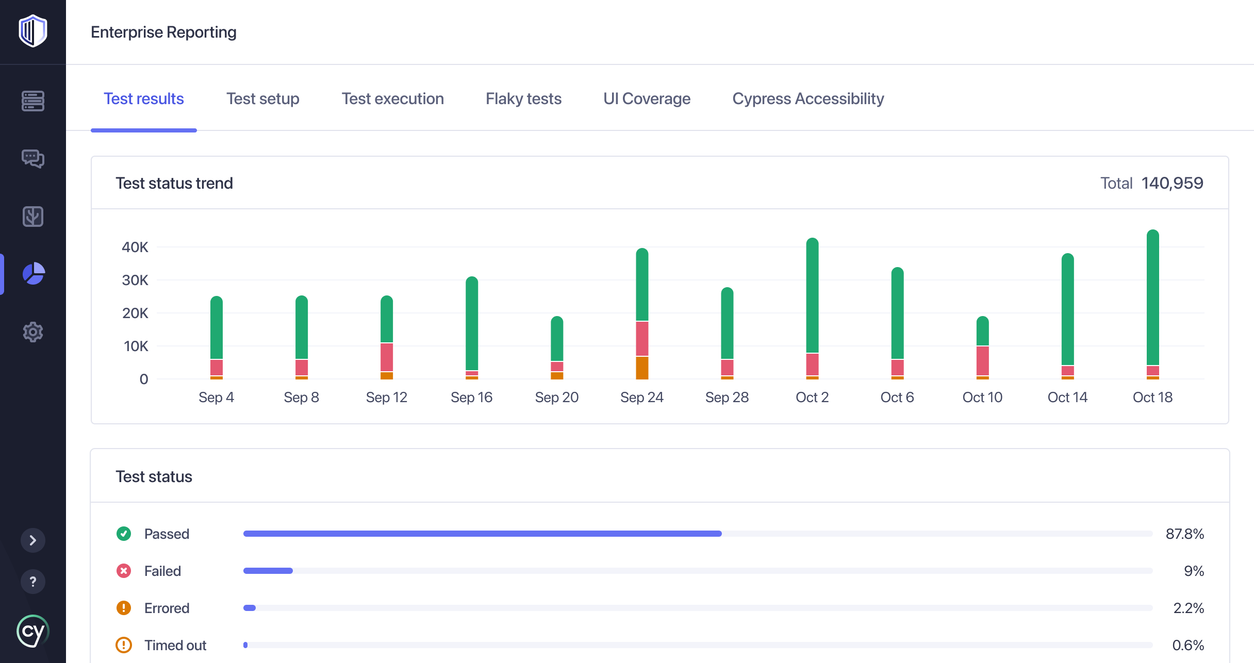
Cypress runs directly inside the browser, giving frontend developers real-time test reloading and excellent debugging tools. For JavaScript-heavy single-page applications, the developer experience is hard to beat: you see your tests run live, step through failures visually, and time-travel through DOM snapshots. The Cypress Dashboard adds test analytics, flake detection, and parallelization across CI machines for teams that outgrow the free tier.
Where it falls short: Cypress is limited to Chromium, Firefox, and WebKit. It does not support mobile at all. It is slower than Playwright at scale, especially when running large parallel suites. Multi-tab and multi-origin flows require workarounds. For teams whose regression scope extends beyond the browser, Cypress becomes one tool in a multi-tool stack rather than the solution.
5. Selenium
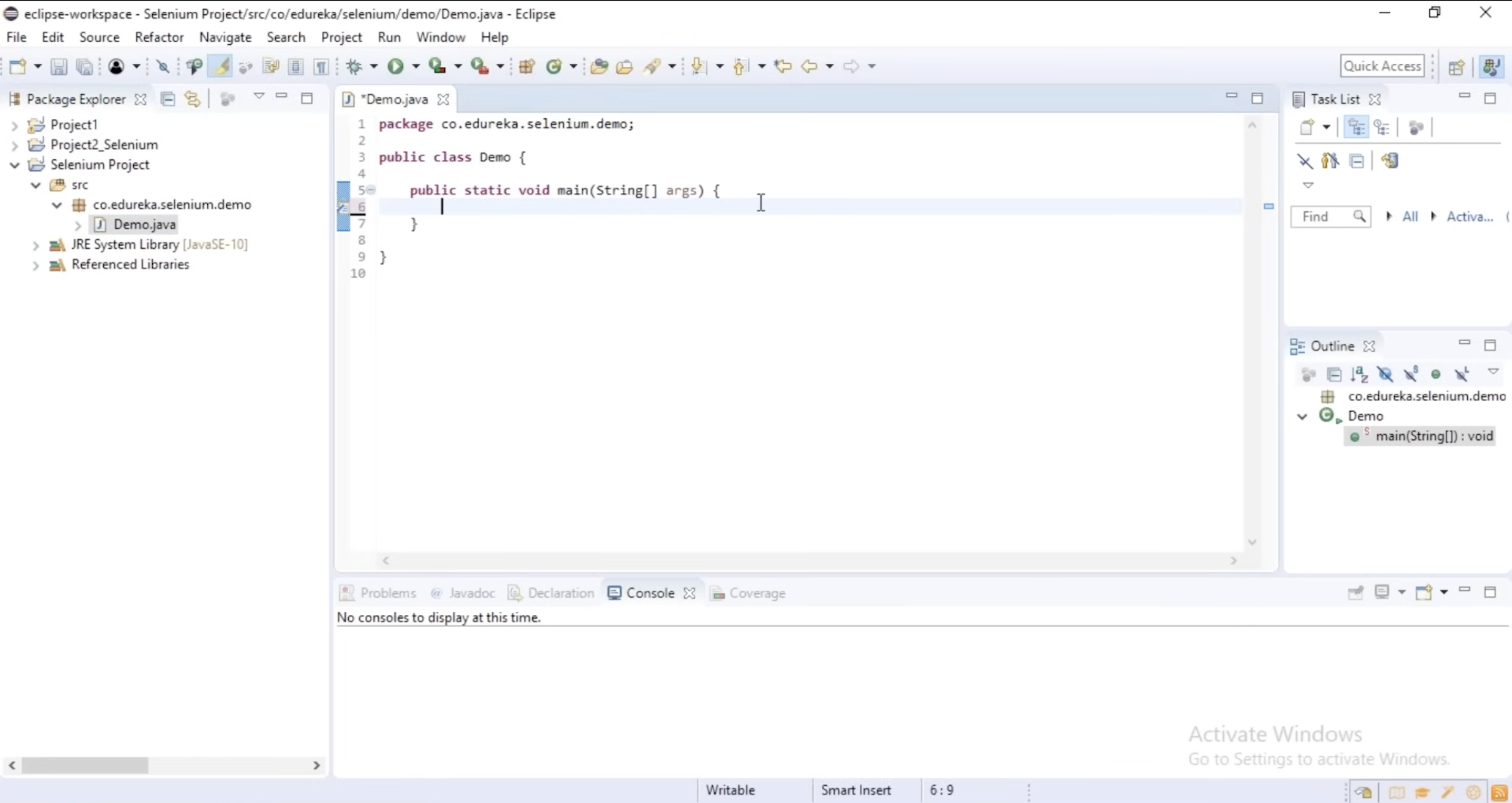
Selenium has the largest ecosystem, supports every major browser, works with Java, Python, C#, Ruby, and JavaScript, and has been around long enough that almost every QA engineer has used it. The community and documentation are unmatched. If you need a regression tool that new hires will already know, Selenium is the safe bet.
A tester on r/softwaretesting put the current state bluntly: "Outside of automated API test development (which AI is extremely good at generating), our toolkit from 2020 looks roughly the same in 2026." Selenium is part of that stable toolkit. It works. It just requires more effort to maintain than newer alternatives.
Where it falls short: Selenium is slow compared to Playwright and Cypress. It does not auto-wait, so you write explicit waits or deal with flakiness. It has no AI capabilities, no self-healing, and no codeless option. For greenfield projects, Playwright has largely replaced it. For legacy suites with thousands of existing tests, the migration cost often keeps teams on Selenium.
That migration cost is not trivial: teams with mature suites face months of rewriting, and a commenter on the same thread described that "AI-driven tests eat tokens, are slower, and are more flaky than Playwright's runtime-resolved locators," suggesting the migration path is code-first Playwright, not AI tools.
6. Testim

Testim (now part of Tricentis) offers pre-built test steps for common Salesforce operations, locators powered by Salesforce metadata, and codeless steps for complex Salesforce operations like permissions testing. For Salesforce Lightning environments, these purpose-built features save significant setup time compared to generic tools.
Outside of Salesforce, Testim is a capable low-code tool with AI-assisted locator stabilization and a custom code escape hatch. The AI copilot helps create and debug tests. Testim also supports web and mobile regression, so teams running Salesforce alongside a customer-facing web app can cover both from one platform.
Where it falls short: the Salesforce specialization means teams not on Salesforce are paying for capabilities they will not use. And as a Tricentis product, enterprise pricing and sales cycles apply. Smaller teams may find the procurement process alone takes longer than setting up an open-source alternative.
7. Tricentis Tosca
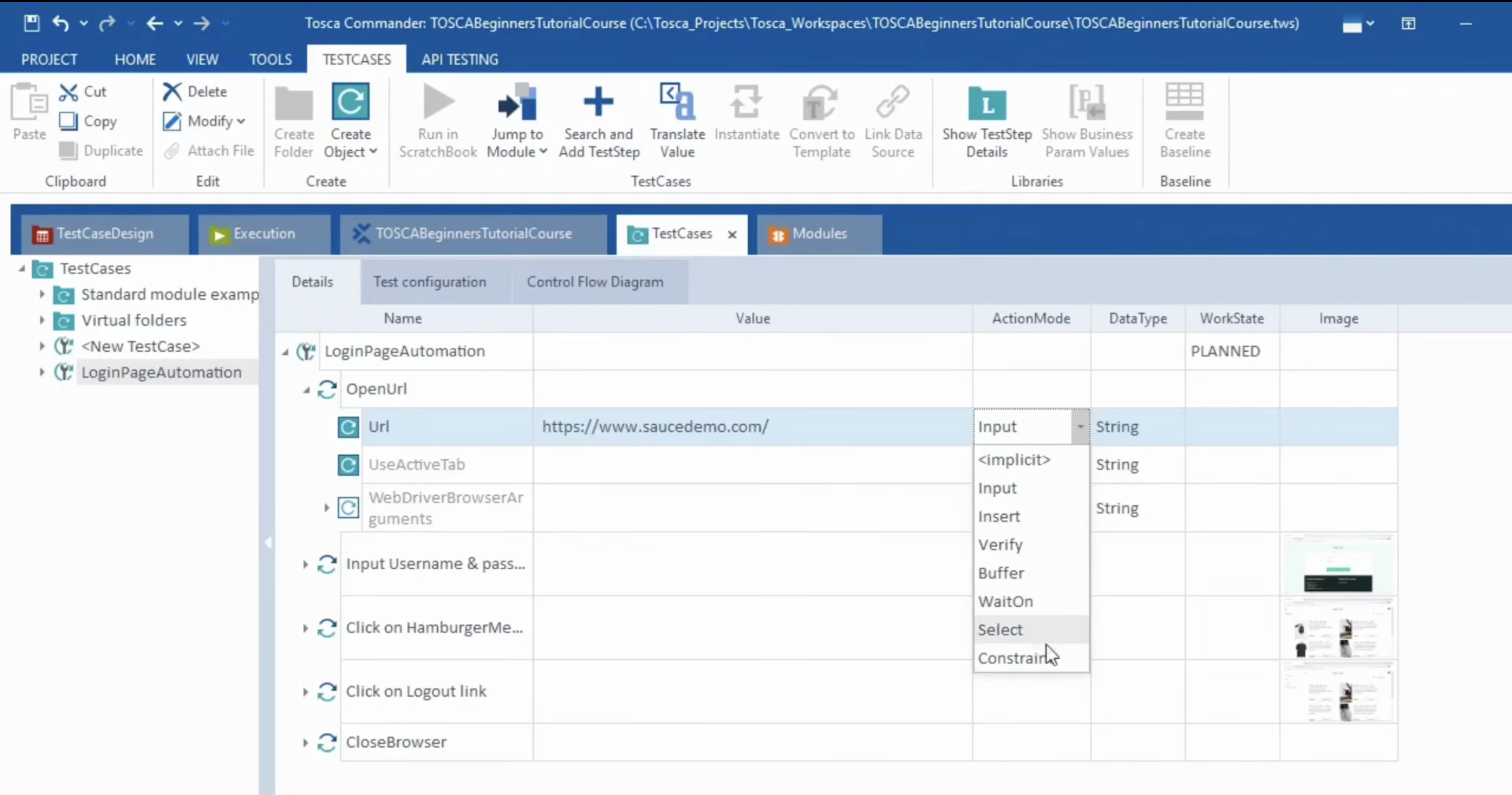
Tricentis Tosca covers testing surfaces that open-source tools cannot: SAP transactions, mainframe terminal screens, thick-client desktop applications, and packaged enterprise software. Its model-based test design separates test logic from technical implementation, which reduces maintenance when the underlying technology changes.
Where it falls short: it is expensive, enterprise-only, and overkill for teams whose regression scope is limited to web and mobile. If your stack does not include legacy desktop or SAP, you do not need Tosca. The learning curve is steep and Tosca projects typically require certified consultants for initial setup, which adds to the total cost of ownership.
How do you pick the right regression testing tool?
Five questions narrow the field. Answer them in order and the shortlist writes itself.
What platforms do you ship to? Web only means Playwright or Cypress. iOS and Android means Appium or Maestro. All three platforms means Autosana or a multi-tool stack. This single question eliminates most candidates immediately.
Who writes and maintains the tests? If engineers own automation, Playwright or Selenium gives full control. If QA engineers write tests without deep coding skills, Mabl removes the barrier. If nobody wants to own test maintenance, self-healing tools (Autosana, Mabl, Momentic) absorb the upkeep. A thread on r/QualityAssurance with 187 upvotes surfaced the problem: QA automation job listings now require algorithm knowledge and framework architecture closer to software engineering than testing. If you cannot hire for that role, do not pick a tool that requires it.
How much flakiness can you tolerate? A commenter on r/QualityAssurance described what flaky automation looks like in practice: "Slow automation is garbage. Flaky automation is garbage. Automation should prove your application works to requirements, quickly, and not a lot else." If your current suite is more noise than signal, the next tool should prioritize stability (self-healing, auto-waiting, deterministic data) over feature breadth.
How fast does your CI need feedback? A regression suite that takes 45 minutes per PR trains developers to ignore it. Fast feedback under 10 minutes is what keeps regression results relevant. Playwright's native parallelization and Autosana's selective flow execution both optimize for this. If your current suite takes too long, the next tool should prioritize speed alongside coverage.
What is your budget? Open-source frameworks (Playwright, Selenium, Cerberus) are free. AI-assisted codeless tools (Mabl from ~$4,000/yr) cover the middle. Enterprise platforms (Tricentis Tosca, TestComplete from $4,629/yr) serve organizations with legacy and desktop coverage needs. AI-native tools (Momentic from $200/mo, Autosana contact pricing) trade upfront cost for maintenance reduction.
For real device testing at scale, add a cloud lab (BrowserStack, LambdaTest, Sauce Labs) as execution infrastructure on top of whichever authoring tool you choose.
Conclusion
Pick the tool that matches your team, your platforms, and your budget. If you ship web-only and have engineers who write TypeScript, Playwright. If you ship cross-platform and want self-healing, Autosana. If you are on Salesforce, Testim. If you need a desktop and SAP, Tosca. A regression suite is only as good as the team's willingness to maintain it. The best tool is the one your team will actually run on every PR six months from now.
FAQ
What is automated regression testing?
Re-running a set of test flows after every code change to verify existing functionality still works. It catches regressions before they reach production.
What is the best automated regression testing tool in 2026?
It depends on your platforms and team. Playwright for web. Autosana for cross-platform (iOS, Android, web). Mabl for codeless. Tricentis Tosca for enterprise desktop and SAP.
How do you stop regression tests from being flaky?
Replace XPath selectors with data-testid attributes, add deterministic wait conditions, isolate test data, and run on stable CI infrastructure. Self-healing tools (Autosana, Mabl) add a fifth lever by reanchoring locators automatically.
How often should you run regression tests?
Critical flows on every pull request. Full regression sweep before release candidates. A suite that only runs on release day finds problems when they are most expensive to fix.
What is the difference between regression testing and retesting?
Retesting verifies a specific fixed bug no longer exists. Regression testing verifies the rest of the application did not break when that bug was fixed. Retesting is targeted. Regression testing is broad.
How does AI change automated regression testing?
AI reduces authoring time by generating test flows from descriptions. It reduces maintenance by reanchoring selectors when the UI changes. It does not eliminate the need for human judgment about what to test.