
BrowserStack Alternatives in 2026: 9 Tools Compared for Web and Mobile
BrowserStack alternatives compared: LambdaTest, Playwright, Autosana, Sauce Labs, Kobiton, Cypress, Appium, Mabl and testRigor. Pricing, what each replaces, and the free options.
Yuvan Sundrani · 17 min read
autosana.ai
TL;DR
- LambdaTest is the closest like-for-like swap, with comparable breadth starting around $15 a month.
- Playwright replaces BrowserStack Automate outright for web, free and open source.
- Autosana is the one to look at when your real problem is a native iOS or Android app rather than browser coverage.
- Sauce Labs is the enterprise-grade device cloud with the compliance paperwork to match.
- Kobiton suits teams who need an on-premises device lab rather than someone else's cloud.
- Cypress is the front-end favourite when debugging experience matters more than browser breadth.
- Appium is the free DIY route if you have the engineering time to run your own grid.
- Mabl covers the low-code slot with machine-learning selector healing.
- testRigor writes tests in plain English for teams with non-technical authors.
BrowserStack has been the default answer to cross-browser testing for over a decade, and it earned that position. The platform covers 3,500 browser and operating-system combinations, keeps over 2,000 real devices online, and counts Google, Microsoft, Amazon and Zoom among its customers.
The product is polished. The 2026 problem is the catalogue that sits behind it, and the invoice that catalogue generates.
Why move off BrowserStack?
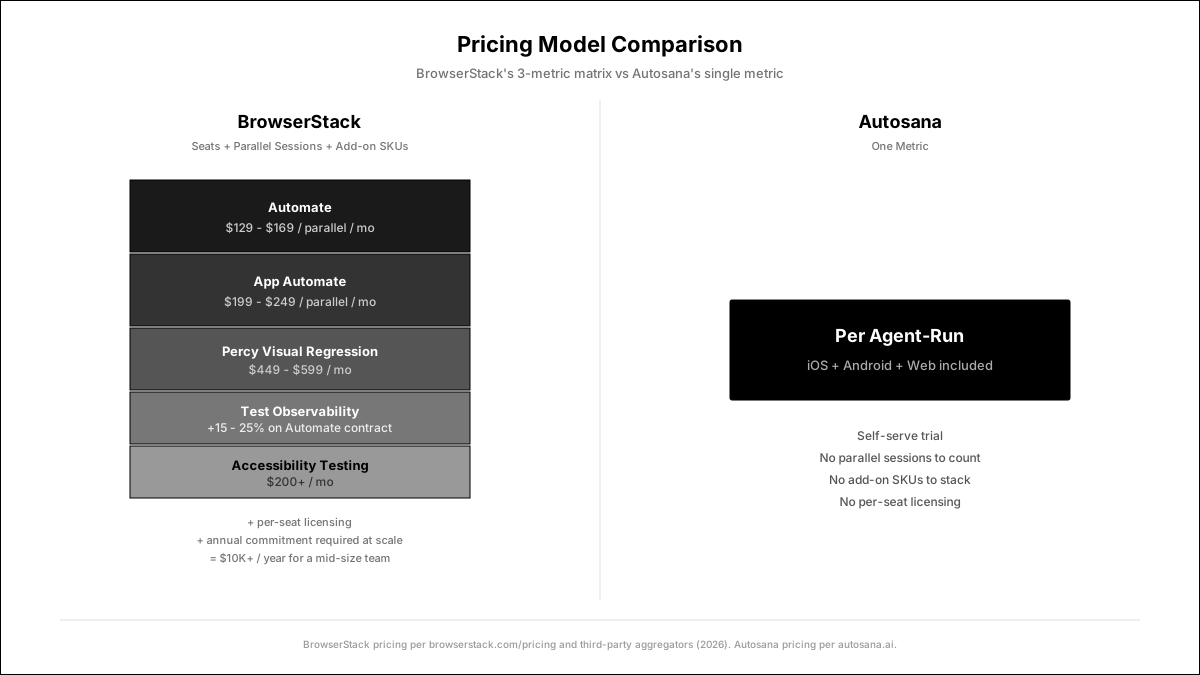
Pricing multiplies across seats, parallel sessions and modular add-ons, as set out on BrowserStack's own pricing page. Automate runs $129 to $169 per parallel session per month, App Automate $199 to $249, Percy $449 to $599 for visual regression, and Test Observability layers 15 to 25 percent on top of the Automate contract. A mid-size team stacking four of those clears $10,000 a year while using half the platform.
The per-parallel arithmetic is the actual complaint. A r/softwaretesting thread titled "Looking for alternative to browserstack" drew 20 upvotes and 28 comments, and the replies converge on cost rather than capability. A r/QualityAssurance thread, "Cheaper (but still good) Browserstack alternatives", has stayed active for years on the same point, and a more recent post pulled 17 upvotes and 37 comments, which is heavy engagement for a procurement question.
The engineering reputation stays intact, and a r/webdev post praising the company's transparency after a security incident drew 345 upvotes. The objection is the invoice.
Here is the reframe worth holding onto: most teams shopping for a BrowserStack alternative are funding a thirty-product platform to solve a three-tool problem.
| Tool | What It Tests | Pricing | Best For |
|---|---|---|---|
| LambdaTest | Web and mobile, 10,000+ combinations | From $15/mo | Teams wanting BrowserStack breadth for less |
| Playwright | Web (Chromium, Firefox, WebKit) | Free, Apache 2.0 | Code-first web teams replacing Automate |
| Autosana | Native iOS and Android, plus web | Per agent-run, self-serve trial | Teams whose real problem is the mobile app |
| Sauce Labs | Web and mobile, 10,000+ devices | From $49/mo | Regulated enterprises needing compliance |
| Kobiton | Native iOS and Android, 7,000+ devices | Enterprise, free trial | On-premises or private device labs |
| Cypress | Web (Chromium-based, Firefox, WebKit) | Free runner, Cloud paid | Front-end devs who debug in the browser |
| Appium | Native iOS and Android | Free, Apache 2.0 | Teams with time to run their own grid |
| Mabl | Web, with mobile via responsive | Contact sales | Low-code authoring with ML healing |
| testRigor | Web, mobile and API | From $300/mo | Non-technical authors writing plain English |
1. Is LambdaTest a good BrowserStack alternative?
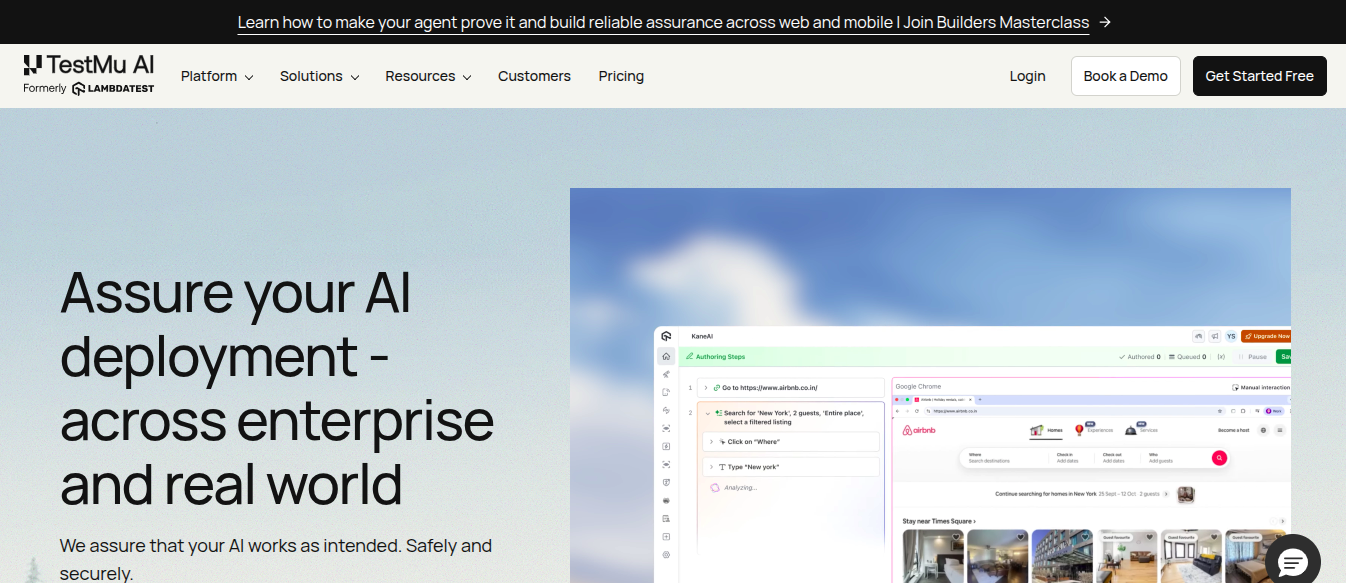
LambdaTest is the alternative most teams land on first, because it answers the same brief at a different price. Over 10,000 browser and operating-system combinations, real devices, parallel execution, and a free tier to start.
HyperExecute handles parallel orchestration, and KaneAI, the platform's AI layer, is bundled rather than sold as a separate SKU. That bundling is the structural difference from BrowserStack, where the equivalent capabilities arrive as Low-Code Automation, Test Observability and Percy, each with its own line on the invoice.
The honest caveat is maturity. The AI features are newer, and device-lab depth on specific OEM models can be thinner than a curated fleet. For most teams running Selenium, Playwright or Appium suites against a grid, that distinction rarely bites.
Pros: Comparable breadth, markedly lower entry price, AI bundled rather than billed separately, free tier.
Cons: Newer AI layer, OEM device depth varies, still a per-parallel pricing model at scale.
Pricing: Free tier, paid from around $15 a month, enterprise custom.
Best for: Teams who want what BrowserStack does and object mainly to what it costs.
2. Can Playwright replace BrowserStack Automate for web testing?
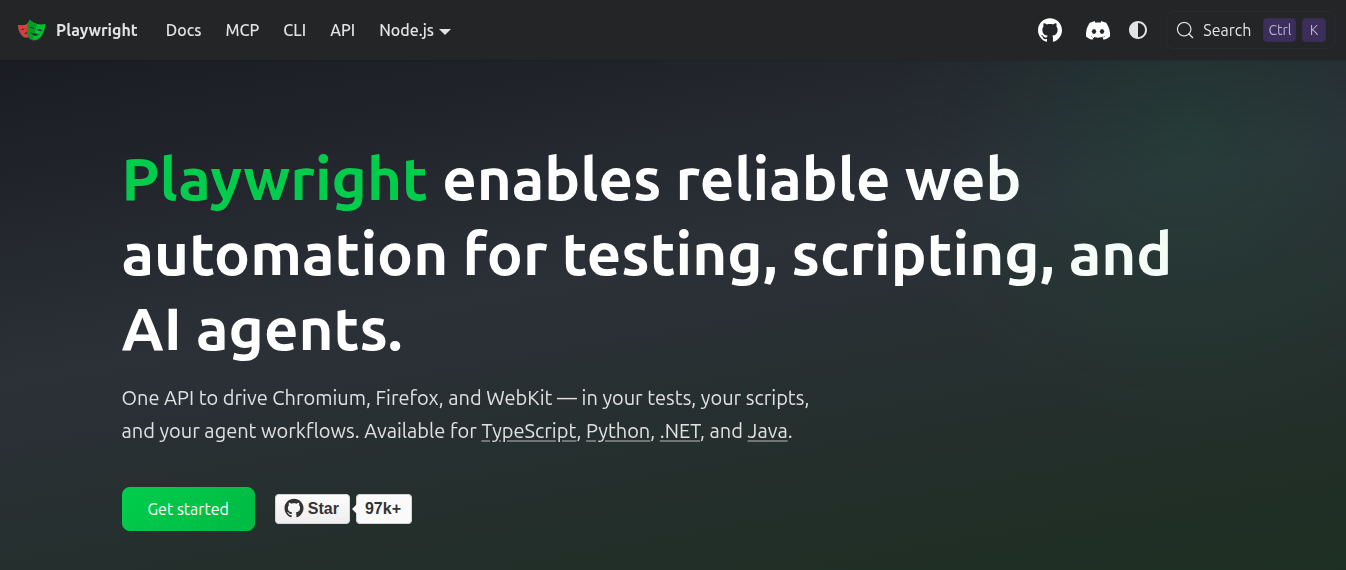
If your BrowserStack usage is Automate and your team writes code, Playwright removes the line item rather than reducing it.
One API drives Chromium, Firefox and WebKit, so Safari coverage arrives without a separate arrangement, per the Playwright documentation. Auto-waiting eliminates an entire category of flaky test, codegen records interactions into runnable tests, and the trace viewer makes failures readable after the fact. Suites shard across CI machines without standing up a grid.
The gap is real and worth naming. Playwright runs the browsers you provision. It gives you no device cloud, no real iOS or Android hardware, and no manual interactive session. Teams replacing Automate with Playwright keep paying for App Automate, or find something else for mobile.
This is also the answer to a question we see frequently, which is what to use when you already have a Playwright suite and simply want somewhere to run it. The honest answer is frequently that you need nothing beyond your own CI.
Pros: Free, genuinely cross-browser, auto-waiting, multi-language, excellent debugging artifacts.
Cons: No native mobile, no device cloud, no manual session, you supply the infrastructure.
Pricing: Free, Apache 2.0.
Best for: Code-first web teams whose BrowserStack spend is mostly Automate parallels.
3. Is Autosana a BrowserStack alternative for mobile app testing?
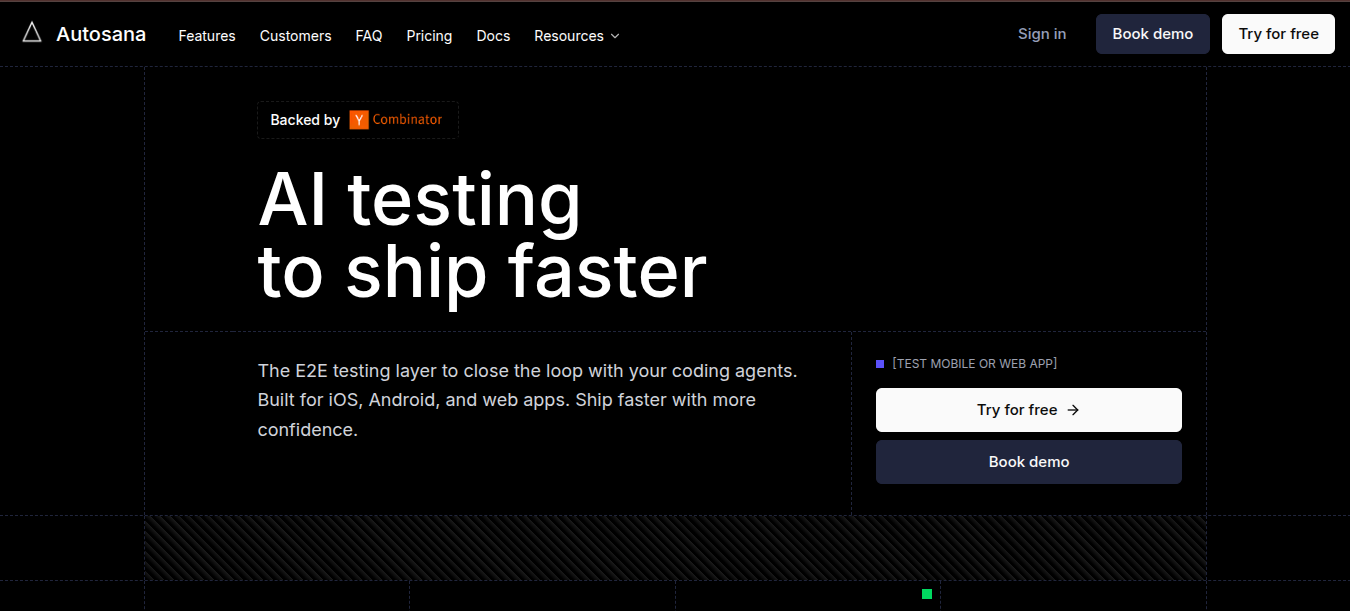
Here is the honest pivot. If your whole problem is browser coverage, LambdaTest and Playwright above are the better answers, and you should take one of them.
A large share of teams searching for a BrowserStack alternative are not actually solving a browser problem. They are paying for App Automate because they ship a native iOS or Android app, and the thing that hurts is the Appium suite running on top of it. The device cloud is a cost. The selector maintenance is the pain.
Autosana approaches that differently. Flows are written as intent rather than as scripts, so instead of locating an element by accessibility ID you describe what a user accomplishes. The agent reads the screen, decides the interaction, and re-plans against whatever the interface currently shows. A UI change that would break a selector leaves the flow intact, because no selector was ever written.
One stated flow covers iOS, Android and web under a single apps object, which removes the separate-suite-per-platform arithmetic. Web coverage runs across the major browsers per the web testing docs, while mobile executes on virtual and physical iOS and Android devices rather than emulators. Results post to the pull request through the GitHub bot with session replay attached, so a reviewer watches what happened rather than reconstructing it from a log, and flows are invocable by coding agents over the MCP server.
Pros: No selectors to maintain, one flow across iOS, Android and web, real devices included, session replay on every pull request, per-run pricing rather than per-parallel.
Cons: Built around end-to-end flows, so pixel-level visual regression and protocol-level load testing belong elsewhere. Per-interaction overhead exceeds a compiled in-process framework.
Pricing: Per agent-run with a self-serve trial.
Best for: Teams funding App Automate plus an Appium suite, where the maintenance is the real line item. First run takes under ten minutes via the quickstart.
4. Is Sauce Labs better than BrowserStack for enterprise teams?
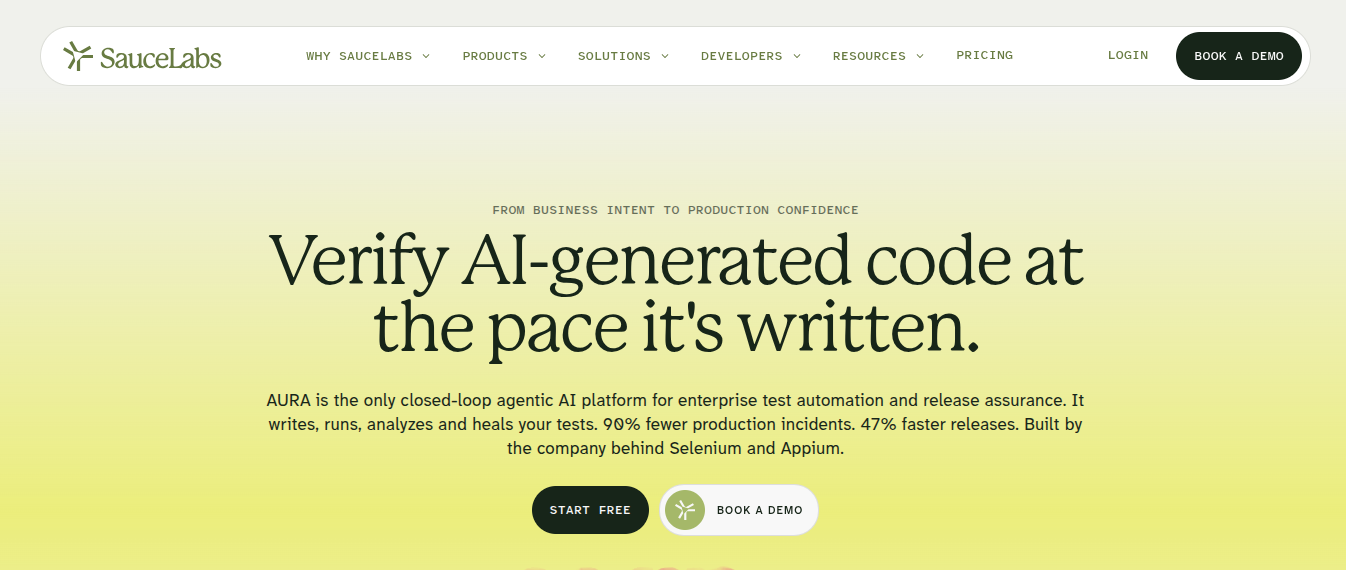
Sauce Labs is the other full-platform answer, positioned further up-market. Over 10,000 real devices and virtual machines, error analytics, AI-assisted failure categorisation through AURA, and the compliance posture larger buyers ask for.
Where it genuinely differs from BrowserStack is procurement rather than capability. SOC 2, ISO 27001, data residency options and enterprise support agreements arrive as standard conversation rather than as exceptions, which matters when security review gates the purchase.
Pricing remains enterprise-weighted, so a team objecting to BrowserStack on cost may find the quote familiar.
Pros: Very large device fleet, strong failure analytics, enterprise compliance as standard, mature integrations.
Cons: Enterprise pricing, interface feels dated beside newer platforms, still bring-your-own-framework.
Pricing: From around $49 a month, enterprise custom.
Best for: Regulated organisations where compliance paperwork decides the vendor.
5. Is Kobiton a BrowserStack alternative for private device labs?
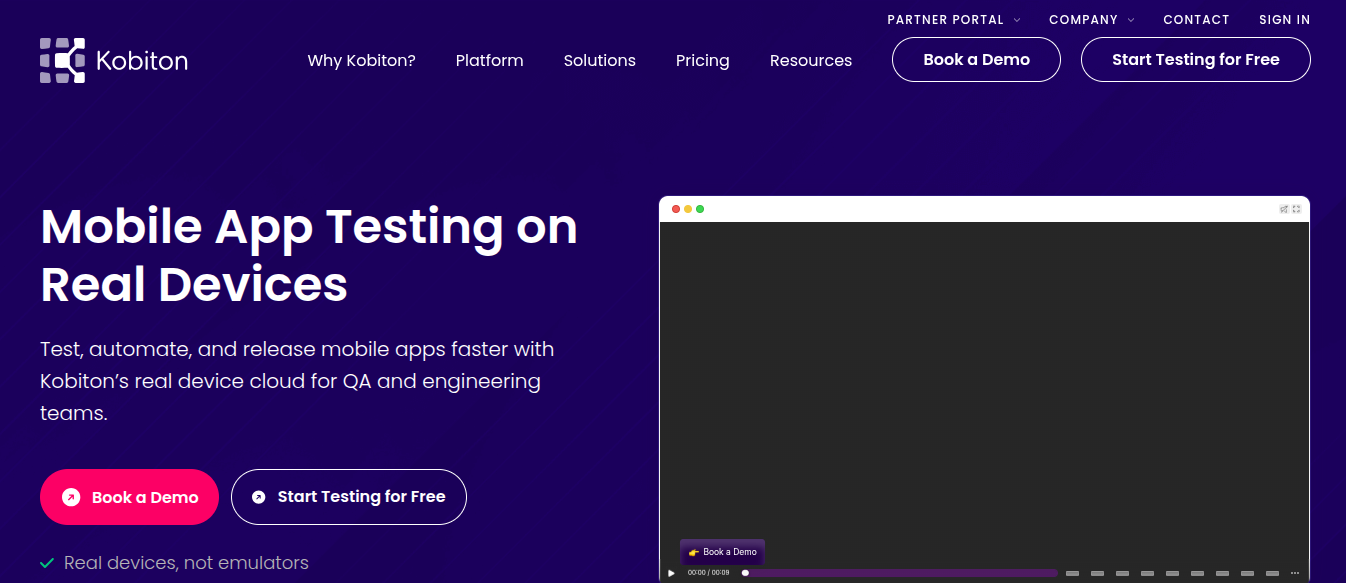
Kobiton covers the App Automate and App Live slots with 7,000 real devices and, unusually, the option to run the lab on your own premises.
That on-premises path is the reason it appears on shortlists in healthcare, finance and government, where device infrastructure cannot sit in a third-party cloud. Teams weighing the build-or-buy question work through it openly, as in an r/QualityAssurance thread on building a device farm from scratch that attracted 21 comments. Scriptless capture generates Appium scripts from manual sessions, which gives teams migrating from manual testing a bridge rather than a rewrite.
The trade-offs are scope and authoring. Mobile only, so web stays elsewhere, and the scriptless layer remains closer to record-and-replay than to intent-based execution.
Pros: Large real-device fleet, on-premises and private cloud deployment, scriptless-to-Appium bridge, SOC 2.
Cons: Mobile only, record-and-replay authoring, enterprise pricing with no public tiers.
Pricing: Enterprise quote, free trial available.
Best for: Regulated teams needing devices inside their own perimeter.
6. Can Cypress replace BrowserStack for front-end testing?
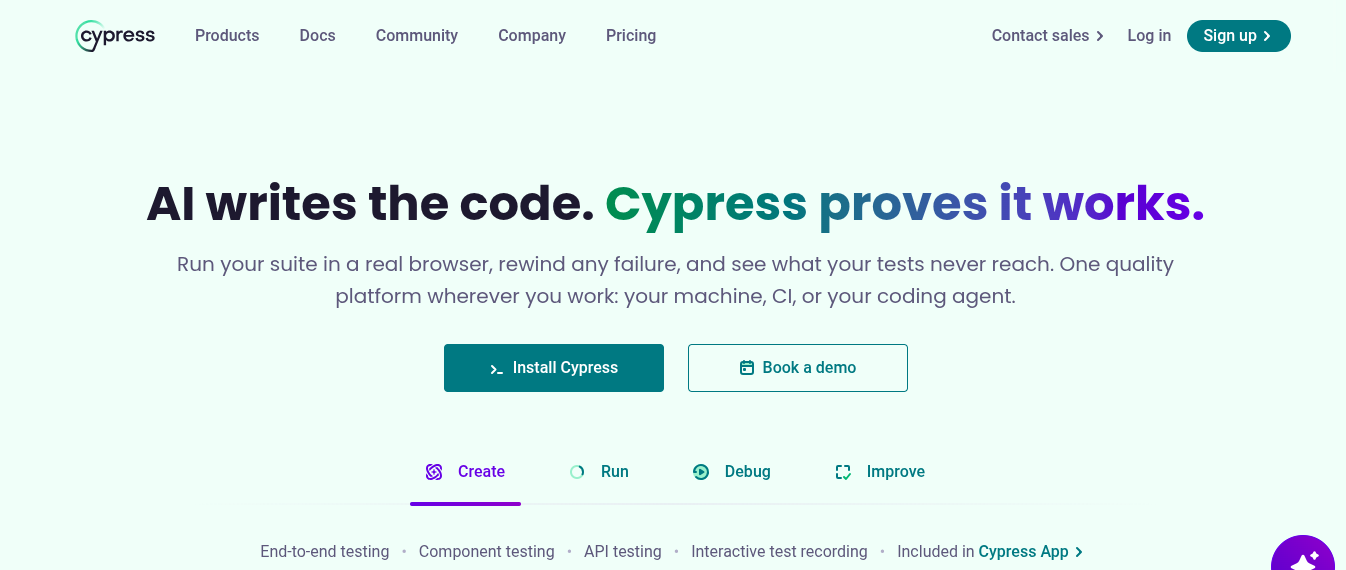
Cypress runs inside the browser's event loop rather than driving it from outside, which is why its debugging feels different. Time-travel snapshots at every step, automatic reloads, and readable traces through DevTools.
Front-end developers tend to like it because it matches how they already work. The trade-off is scope, since cross-origin and multi-tab handling stay weaker than Playwright's, and parallelisation runs through paid Cypress Cloud.
As a BrowserStack replacement it covers the same ground as Playwright, which is Automate and nothing beyond it.
Pros: Best-in-class debugging, automatic waiting, strong TypeScript support, generous free runner.
Cons: JS and TS only, weaker multi-tab and cross-origin story, parallelisation behind the paid cloud, no native mobile.
Pricing: Free open-source runner, Cloud from roughly $67 a month.
Best for: Front-end teams who value in-browser debugging above browser breadth.
7. Is Appium a free BrowserStack alternative?
Appium is the honest answer to "is there a free alternative to BrowserStack for mobile." It is open source, it drives both iOS and Android through platform drivers, and it adheres to the W3C WebDriver standard per the Appium documentation.
What it does not give you is infrastructure. You supply the devices, the grid, the provisioning, and the engineering time to keep all three working. Teams that adopt Appium to escape a device-cloud bill frequently rediscover why the bill existed.
It is also the layer underneath several platforms on this page, including Kobiton's scriptless capture. If selector maintenance is what pushed you to look elsewhere, running Appium directly keeps that problem rather than solving it. We cover that tension in Appium alternatives.
Pros: Genuinely free, every major language, W3C standard, enormous community.
Cons: You own the grid and the devices, selector fragility remains, slower than native frameworks.
Pricing: Free, Apache 2.0, infrastructure is yours.
Best for: Teams with engineering capacity who would rather spend it than spend money.
8. Is Mabl a low-code BrowserStack alternative?
Mabl fills the space BrowserStack sells as Low-Code Automation. A visual builder lets non-technical team members author tests, and machine-learning selector healing re-identifies elements by behavioural properties when a class name or structure changes.
That cushion genuinely helps on cosmetic shifts. On deep structural refactors the healing stays heuristic and will miss some breaks, which is worth knowing before it becomes a surprise. Coverage is web-first, with mobile handled through responsive viewports rather than native device execution.
Pros: Visual authoring for non-engineers, ML-based healing, cloud execution, API testing alongside UI.
Cons: Closed source, healing is heuristic, mobile is viewport emulation rather than native, cost climbs with volume.
Pricing: Commercial, contact sales.
Best for: Enterprise QA organisations where non-engineers need to contribute coverage.
9. Is testRigor a BrowserStack alternative for non-technical teams?
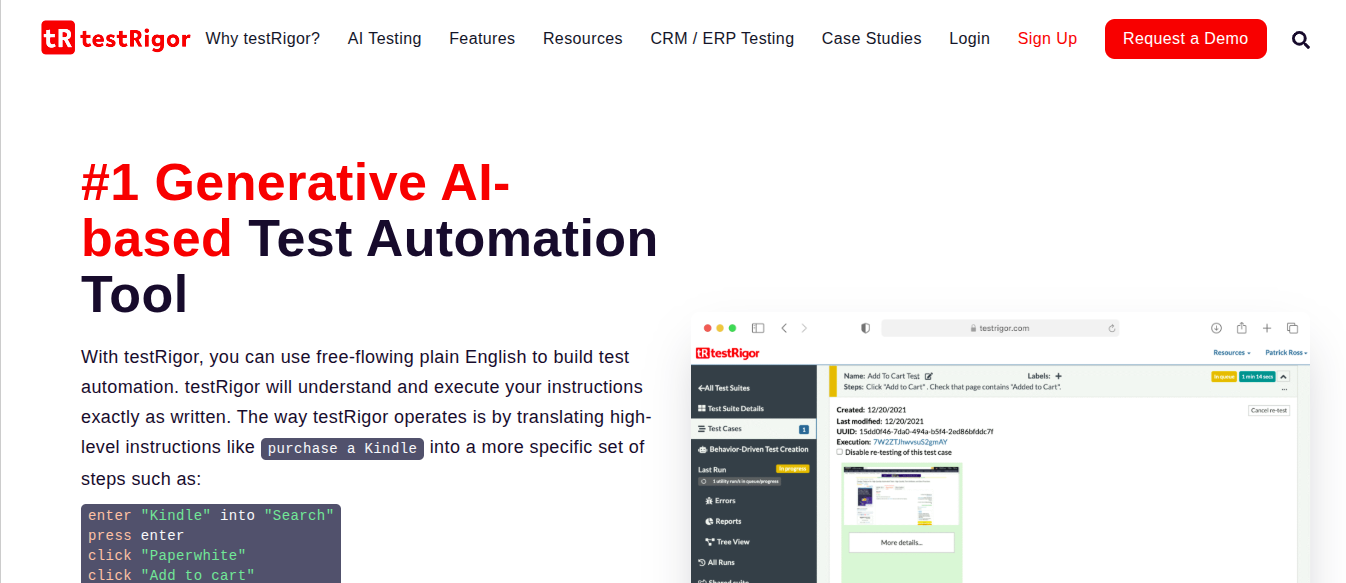
testRigor takes the low-code idea further by removing the builder as well. Tests are written as English sentences, and the platform resolves elements through AI-driven recognition rather than through traditional locators.
For QA teams whose authors are domain experts rather than engineers, that is a genuine unlock. The limits are the familiar ones for the category: complex conditional logic has a steeper curve, English can misread ambiguity, and pricing starts well above the free options here.
Pros: Plain-English authoring, no selectors, cross-browser and mobile support, email and SMS testing built in.
Cons: Steeper curve for conditional logic, ambiguity risk in parsing, commercial pricing only.
Pricing: From around $300 a month.
Best for: Teams where the people who understand the product cannot write code.
So which BrowserStack alternative should you pick?
Start from which SKU you are actually paying for.
If it is Automate and your team writes code, take Playwright and keep the money. Cypress instead if your developers live in the browser and value debugging above breadth.
If it is the whole platform and the objection is price, LambdaTest answers the same brief for considerably less, with the AI layer bundled rather than billed.
If compliance decides your vendors, Sauce Labs is the straightest path through security review.
If devices cannot leave your perimeter, Kobiton is the one with a genuine on-premises story.
If you want free and have engineering time, Appium for mobile, Playwright for web, and your own grid underneath both.
If non-engineers need to author, Mabl for a visual builder, testRigor for plain English.
And if the honest answer is that your browser coverage was never the problem, which is the case more often than the search term suggests, the thing to fix is the Appium suite attached to App Automate rather than the cloud running it. That is where Autosana sits.
Conclusion
BrowserStack is not a product anyone leaves because it works badly. People leave because the per-parallel arithmetic compounds, and because a thirty-SKU catalogue bills for surface they never touch.
Map your actual usage before you shop. Most teams discover they are funding a platform to solve a problem that takes two or three tools, and the cheapest alternative is frequently the one that lets them stop paying for the rest. Run that audit first and the shortlist tends to write itself.
FAQ
What is the best free alternative to BrowserStack?
Playwright for web, free under Apache 2.0 with genuine cross-browser support. Appium for native mobile. Both are free as software while you supply the infrastructure, so the saving is real and the engineering time is the trade.
What replaces BrowserStack App Automate for mobile testing?
Kobiton and Sauce Labs for a like-for-like device cloud, LambdaTest for the same at lower cost, or Autosana where the underlying pain is the Appium suite rather than the devices it runs on.
BrowserStack vs LambdaTest vs Sauce Labs, which is better?
LambdaTest wins on price and bundled AI, Sauce Labs on compliance and device fleet, BrowserStack on polish and ecosystem maturity. For most mid-size teams the deciding factor is the per-parallel bill rather than capability.
What are the best BrowserStack alternatives for a small engineering team?
Playwright plus your own CI costs nothing and covers web entirely. Add LambdaTest's free tier where real devices are needed occasionally. Small teams rarely need a full platform contract.
What replaces BrowserStack App Live for manual testing?
Kobiton and Sauce Labs both offer interactive real-device sessions, and LambdaTest covers it at a lower price point. Appium gives no manual session, since it automates rather than streams a device.
Which BrowserStack alternatives test both iOS and Android apps?
Kobiton, Sauce Labs, LambdaTest and Autosana all cover both. Appium covers both as a framework while you supply the devices. Playwright and Cypress cover neither, since both are browser-only.
What are the best BrowserStack alternatives for a Playwright suite?
Usually none. Playwright provisions its own browsers, so an existing suite runs on your CI without a device cloud underneath. Add a paid platform only when you need real devices or interactive manual sessions.
Is BrowserStack worth the price in 2026?
For teams genuinely using several SKUs across a wide device matrix, yes. For teams using Automate parallels and little else, the per-parallel arithmetic rarely survives a usage audit against free alternatives.